CB-1212 Gas Package Unit Electrical Simulator
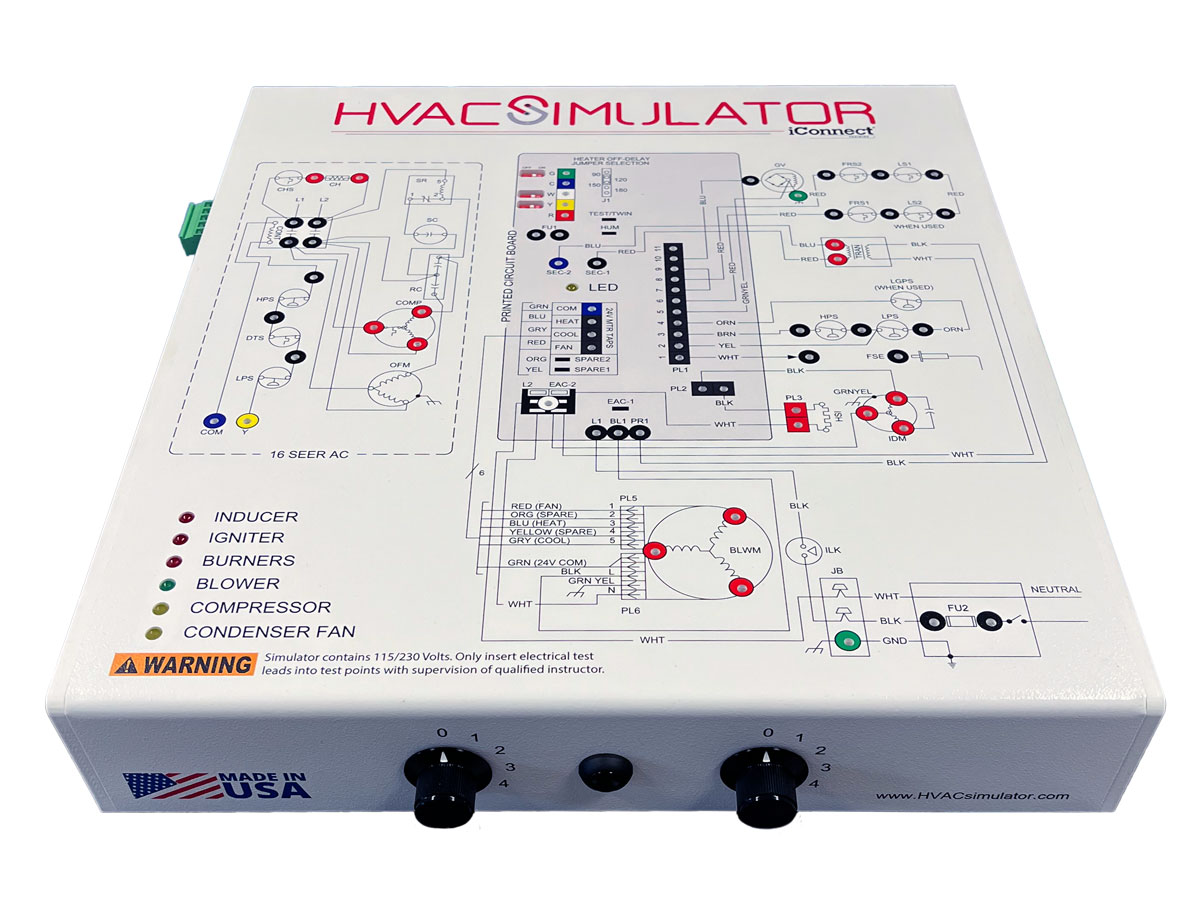
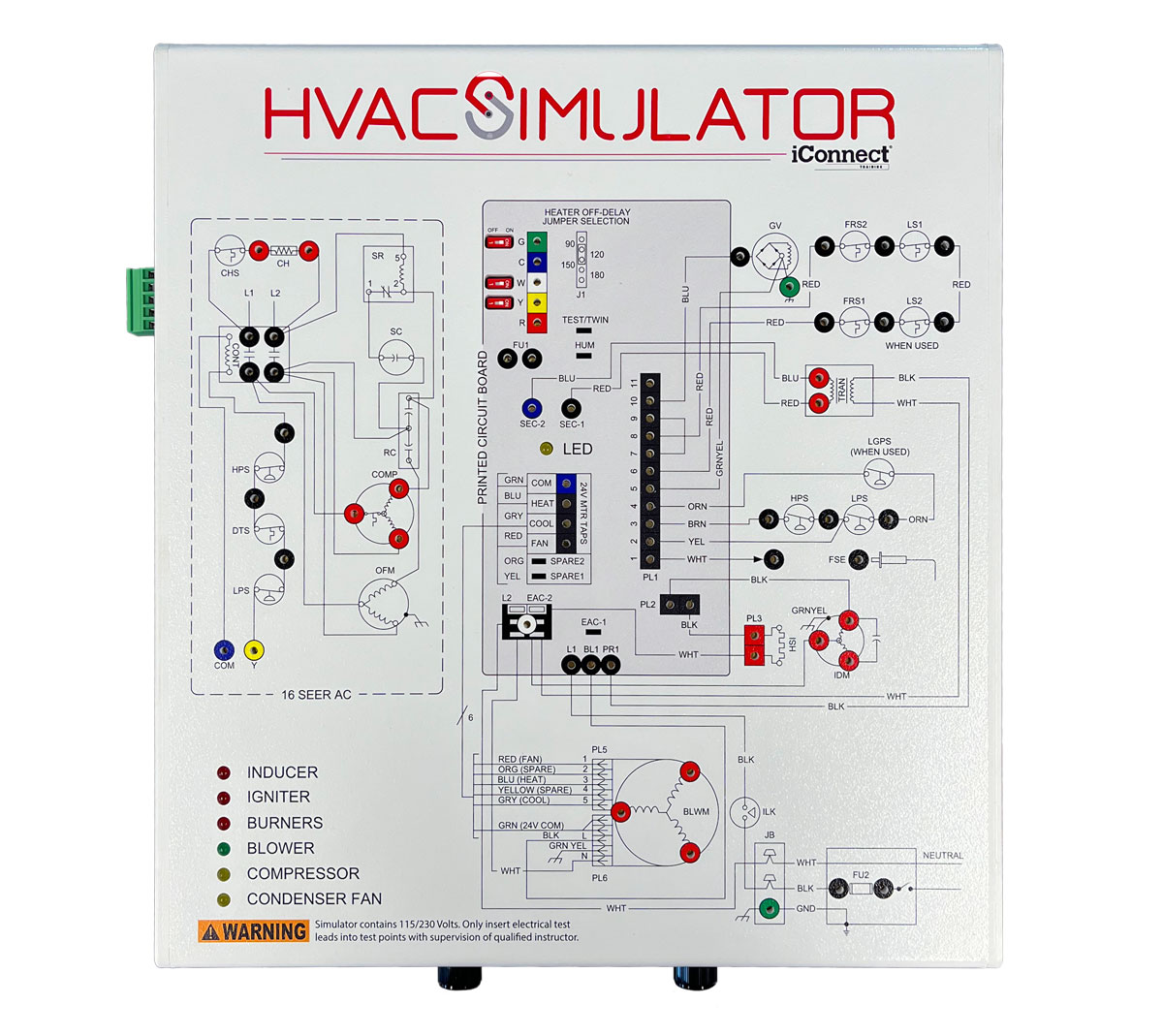
The Gas Package Unit Electrical Simulator is a comprehensive, interactive training tool designed to solidify a student’s understanding of electrical fundamentals within the HVAC industry. This simulator, with 32 faults, provides a hands-on approach to learning, allowing for the safe and effective development of diagnostic skills. By replicating real-world scenarios, it bridges the gap between classroom theory and practical field application.
Specifications:
- Electrical requirements: 120V 15A 60Hz
- Net weight: 8 lbs
- Overall Size: 13.5″ L x 14.5″ W x 3″ H
Features
- Compact design allows easy use and storage
- 100+ page Technician Workbook designed to teach Sequence of Operation, Schematic Reading, and Electrical Diagnostics
- Simulates 16 Heating and 16 Cooling common faults with knowledge checks
- Live Voltage allows any electrical meter to be used to measure voltage, resistance, and microamps
- Simulated 230V for condenser. Unit powered by 110V non-GFCI
- 100+ page Instructor Manual (CBTS-IM) with answers and assessment questions
- Additional books available for purchase
- Purchase of the Desktop Simulator includes the complete Comfort Cooling Simulator program for instructor and students.
Curriculum
The HP-1212 Curriculum serves as a structural framework to guide the learning process for electrical troubleshooting. The curriculum plays a crucial role in shaping the diagnostic process by:
- Clear Learning Objectives: The curriculum outlines specific learning objectives, helping educators and students understand what electrical knowledge and skills are to be achieved.
- Organize Content: The curriculum provides a structural plan for organizing and presenting content in a logical sequence, ensuring that foundational concepts are covered before moving on to more complex topics.
- Consistency: The curriculum ensures consistency in teaching across different manufacturers and textbooks, providing a standardized educational experience.
- Assessment Alignment: The curriculum aligns assessments with learning objectives, ensuring the assessments accurately measure student progress and mastery of the material.
- Student/Instructor Engagement: The curriculum incorporates diverse teaching strategies and resources to engage students, fostering interest and motivation in learning.
- Flexibility: While providing structure, the curriculum allows for flexibility to adapt to the needs of individual students, classrooms, or changing educational standards.
- Life Long Learning Skills: Beyond subject-specific content, the curriculum includes the development of essential skills such as critical thinking, communication, collaboration, and problem-solving.
- Preparation for Future Success: The curriculum equips students with the knowledge, skills, and attitudes necessary for success in further education, careers, and life.