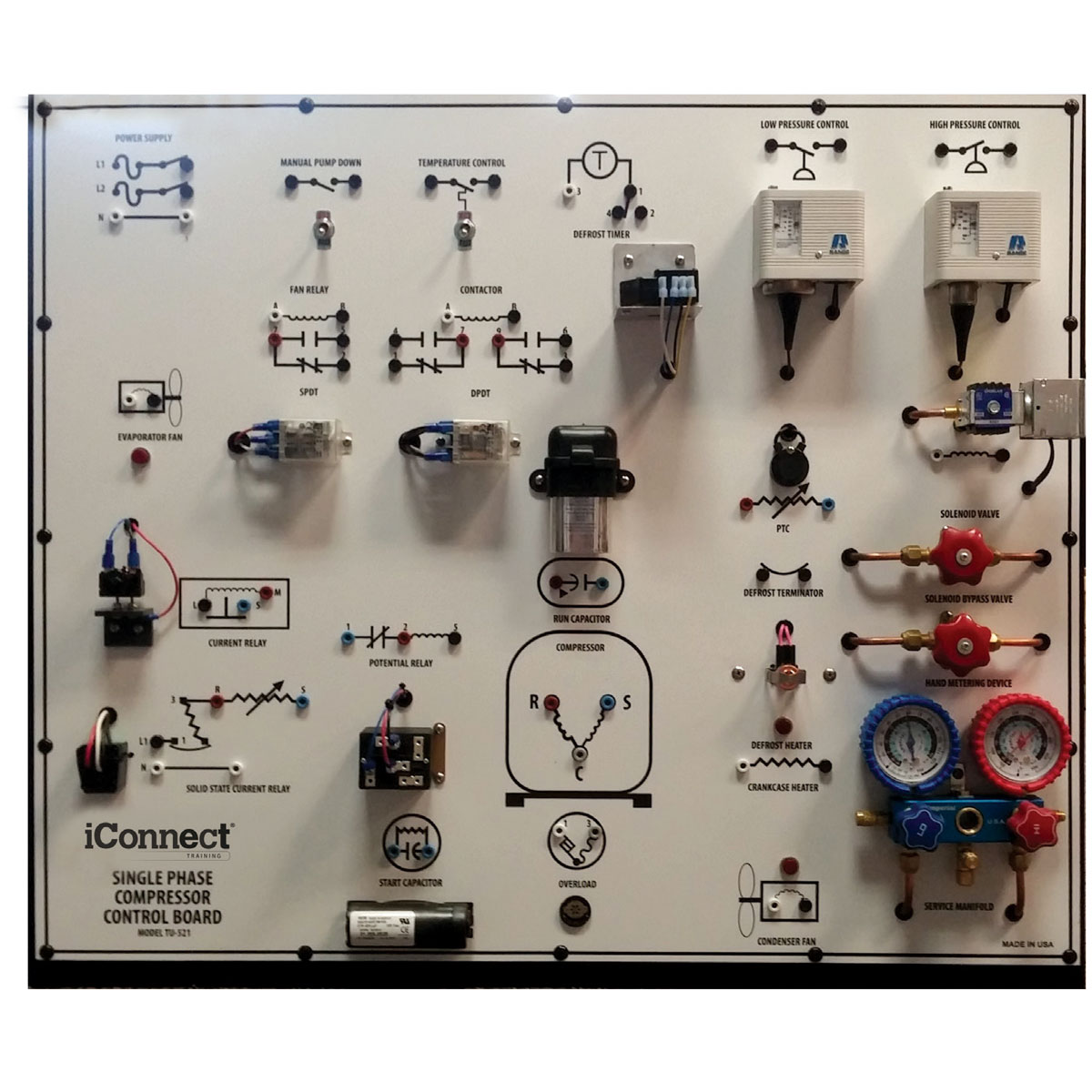
UN-1213 Universal Desktop Gas Furnace Electrical Simulator
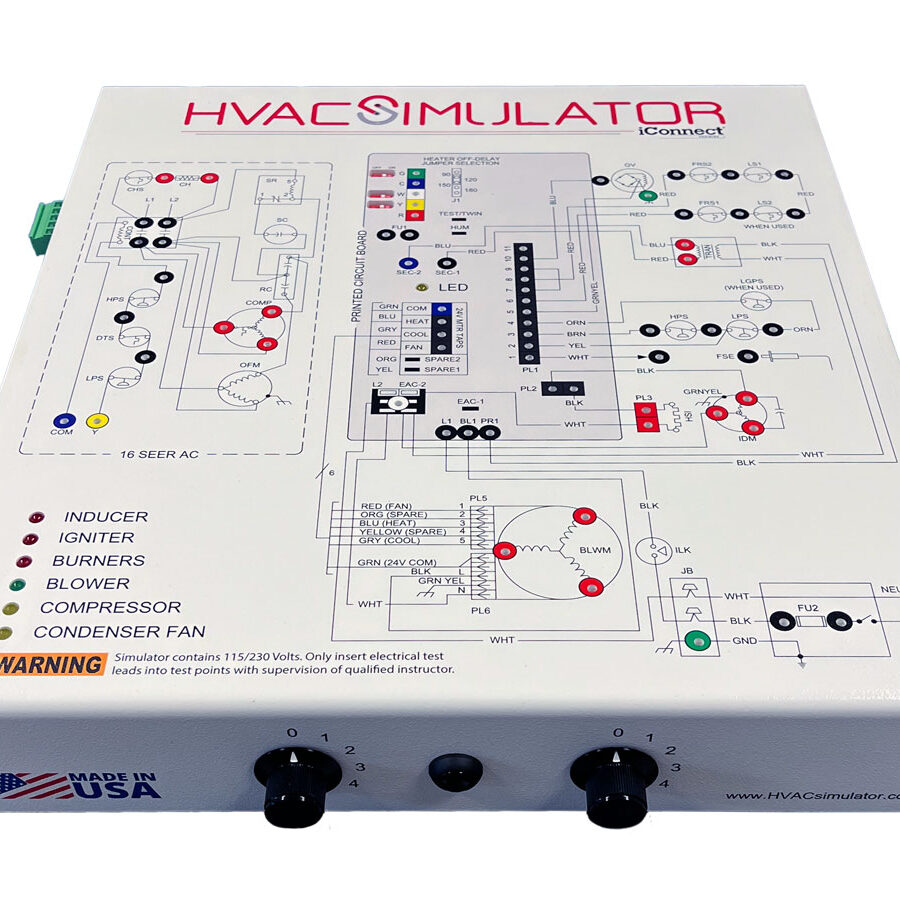
The Universal Desktop Gas Furnace Electrical Simulator is an interactive tool to illustrate the electrical fundamentals in the HVAC industry. It has 16 Heating faults and a student Workbook. The curriculum, alongside the simulator, will improve a student’s electrical troubleshooting proficiency of gas heating, based on Sequence of Operation, Schematic Reading, creating a strong foundation of the basics.
Specifications
- Electrical requirements: 120V 15A 60Hz
- Net weight: 10 lbs.
- Overall size: 13.5″ L x 14.5″ W x 3″ H
Features
- Compact design allows easy use and storage.
- IFC Single-Stage Board.
- Technician Workbook designed to teach Sequence of Operation, Schematic Reading, and Electrical Diagnostics
- Simulates 16 common heating faults with knowledge checks
- Live Voltage allows any electrical meter to be used to measure voltage, resistance, and microamps
- Instructor Manual with answers and assessment questions
- Additional books available for purchase
- Purchase of the Desktop Simulator includes the complete Comfort Cooling Simulator program for instructor and students.
Curriculum
The HP-1212 Curriculum serves as a structural framework to guide the learning process for electrical troubleshooting. The curriculum plays a crucial role in shaping the diagnostic process by:
- Clear Learning Objectives: The curriculum outlines specific learning objectives, helping educators and students understand what electrical knowledge and skills are to be achieved.
- Organize Content: The curriculum provides a structural plan for organizing and presenting content in a logical sequence, ensuring that foundational concepts are covered before moving on to more complex topics.
- Consistency: The curriculum ensures consistency in teaching across different manufacturers and textbooks, providing a standardized educational experience.
- Assessment Alignment: The curriculum aligns assessments with learning objectives, ensuring the assessments accurately measure student progress and mastery of the material.
- Student/Instructor Engagement: The curriculum incorporates diverse teaching strategies and resources to engage students, fostering interest and motivation in learning.
- Flexibility: While providing structure, the curriculum allows for flexibility to adapt to the needs of individual students, classrooms, or changing educational standards.
- Life Long Learning Skills: Beyond subject-specific content, the curriculum includes the development of essential skills such as critical thinking, communication, collaboration, and problem-solving.
- Preparation for Future Success: The curriculum equips students with the knowledge, skills, and attitudes necessary for success in further education, careers, and life.