Thermostat control wiring is one of the foundational skills HVAC students need to understand before entering the field. While it may seem simple on the surface, thermostat wiring connects directly to system operation, troubleshooting, control voltage, programming, and customer-facing service work.
For HVAC instructors, the goal is not just to help students memorize terminal letters or cable color codes. Students need to understand what happens when a thermostat calls for cooling, heating, fan operation, or heat pump mode. When they can connect the wiring to the system response, they begin to build the kind of troubleshooting confidence that carries into real service work.
Why Thermostat Wiring Requires More Than Memorization
Many students first approach thermostat wiring as a color-matching exercise.While cable color code standards are important, they are only one part of the learning process.
In the field, students will eventually face systems where the wiring does not look exactly like the diagram.
Students should be able to identify terminal functions, understand 24VAC control switching theory, and recognize how voltage relationships change in different modes of operation. Instead of simply following a diagram, they need to know what the thermostat is telling the system to do and how to verify that signal.
Teaching the Relationship Between the Thermostat and the System
A thermostat is more than a wall control. It is the command point that tells the HVAC system when to start, stop, heat, cool, or run the fan. When students understand that relationship, thermostat wiring becomes much easier to teach.
For example, a call for cooling is not just a wire energizing a terminal. It is the beginning of a sequence that affects the condenser, indoor blower, and system operation. A call for heat may involve different control paths depending on whether the system is conventional fossil fuel equipment or a heat pump. Fan operation, emergency heat, and reversing valve logic can all introduce additional learning opportunities.
By connecting wiring practice to real system behavior, instructors can help students see how each control decision affects the equipment.
Preparing Students for Real-World Thermostat Setups
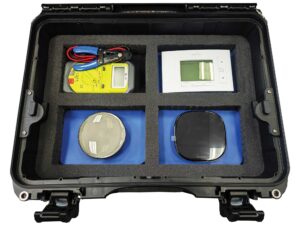
Once students understand the core control wiring concepts, they are better prepared for the variety of thermostat setups they will see in the field. Not every system will use the same thermostat brand, configuration, or setup process. However, students who understand the fundamentals can adapt more easily.
This is where classroom training should focus on the process. Students should learn how to read terminal labels, compare wiring to system type, follow manufacturer setup procedures, and test their work with a multimeter. The goal is to build technicians who can think through the system instead of relying only on memory.
Teaching Conventional and Heat Pump Applications
Thermostat wiring also gives instructors a practical way to compare different HVAC system types. Conventional heating and cooling systems have different control needs than heat pumps, and students benefit from seeing those differences firsthand.
Instructors can use thermostat control wiring lessons to cover:
Conventional heating and cooling calls
Students can learn how a thermostat initiates a call for heat, cooling, or fan operation and how those signals relate to system response.
Heat pump operation
Heat pump systems introduce additional concepts such as reversing valve logic, auxiliary heat, and emergency heat operation.
Mode-specific voltage changes
Students should understand what voltage should be present during different operating modes and how to confirm those readings during troubleshooting.
These lessons help students move from basic wiring practice to a stronger understanding of real HVAC control behavior.
Building Troubleshooting Confidence With a Multimeter
Thermostat wiring is also an ideal place to strengthen multimeter skills. Students should not only know where wires connect, but also how to verify whether the system is receiving the correct signal.
With the right training setup, instructors can teach students how to check for 24VAC control voltage, confirm a call for heating or cooling, identify wiring errors, and understand expected voltage relationships in different modes of operation.
This builds critical thinking. Instead of guessing why a system is not working, students learn to test, observe, and make informed decisions.
Making Thermostat Wiring Easier to Demonstrate in Class
Classroom space, lab time, and equipment availability can all make hands-on thermostat wiring instruction more difficult. Instructors often need tools that are easy to move, easy to demonstrate, and practical for small group learning.
A compact thermostat training unit can help bring wiring concepts directly into the classroom or lecture setting. Instead of waiting for students to access a full HVAC system, instructors can demonstrate control wiring, programming, and troubleshooting in a focused way.
How the TU-TSTAT Supports Thermostat Control Wiring Instruction
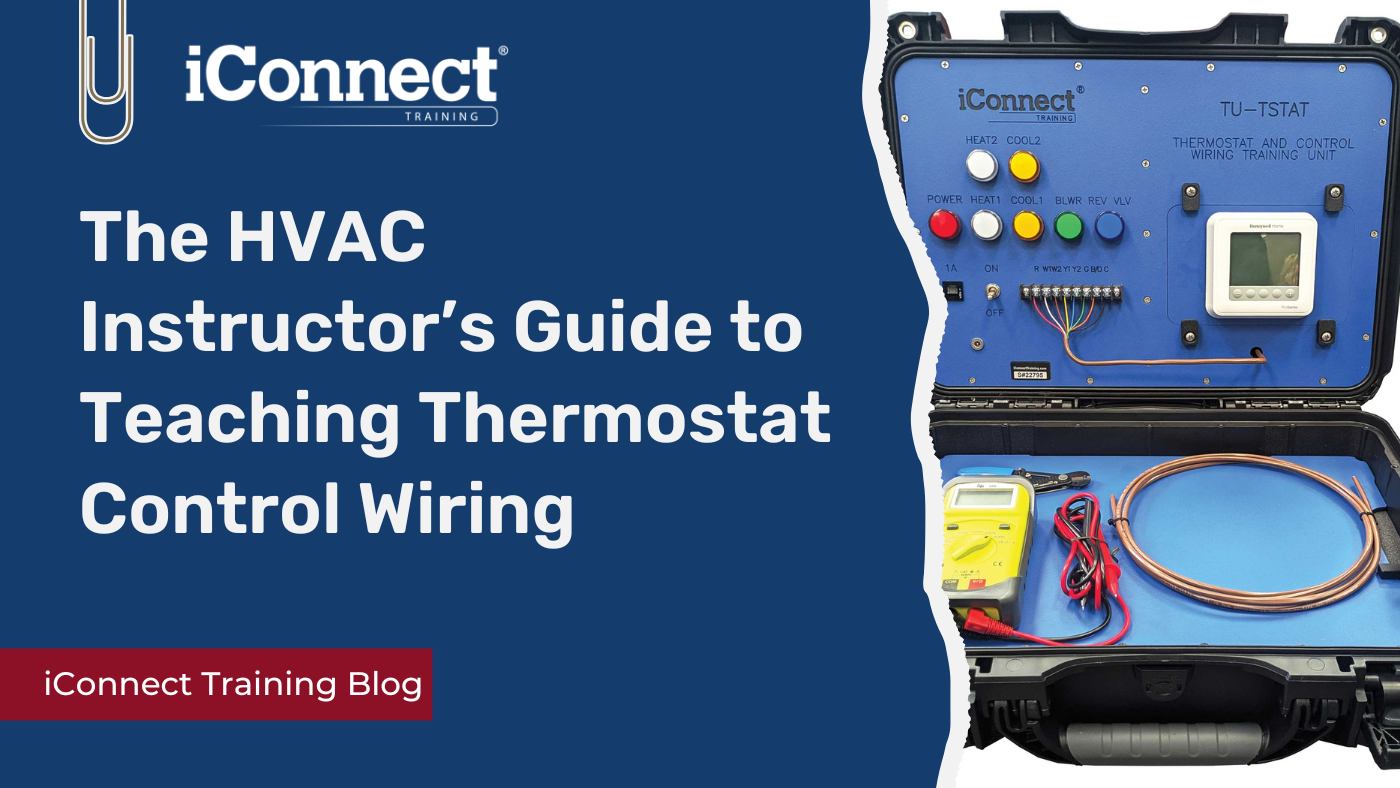
iConnect Training’s latest hands-on training solution, the TU-TSTAT Thermostat and Control Wiring Training Unit, is designed to help instructors teach both the theory and practical application of thermostat wiring, controls, and programming.
The unit is portable, compact, and cost-effective for classroom use. It is compatible with most thermostat brands and can simulate fossil fuel or heat pump systems, giving instructors flexibility as they teach different applications.
iConnect Training’s TU-TSTAT Thermostat and Control Wiring Training Unit gives instructors a practical way to bring thermostat control wiring into the lab, lecture, or classroom setting. To learn more, request a quote or download the spec sheet from iConnect Training.