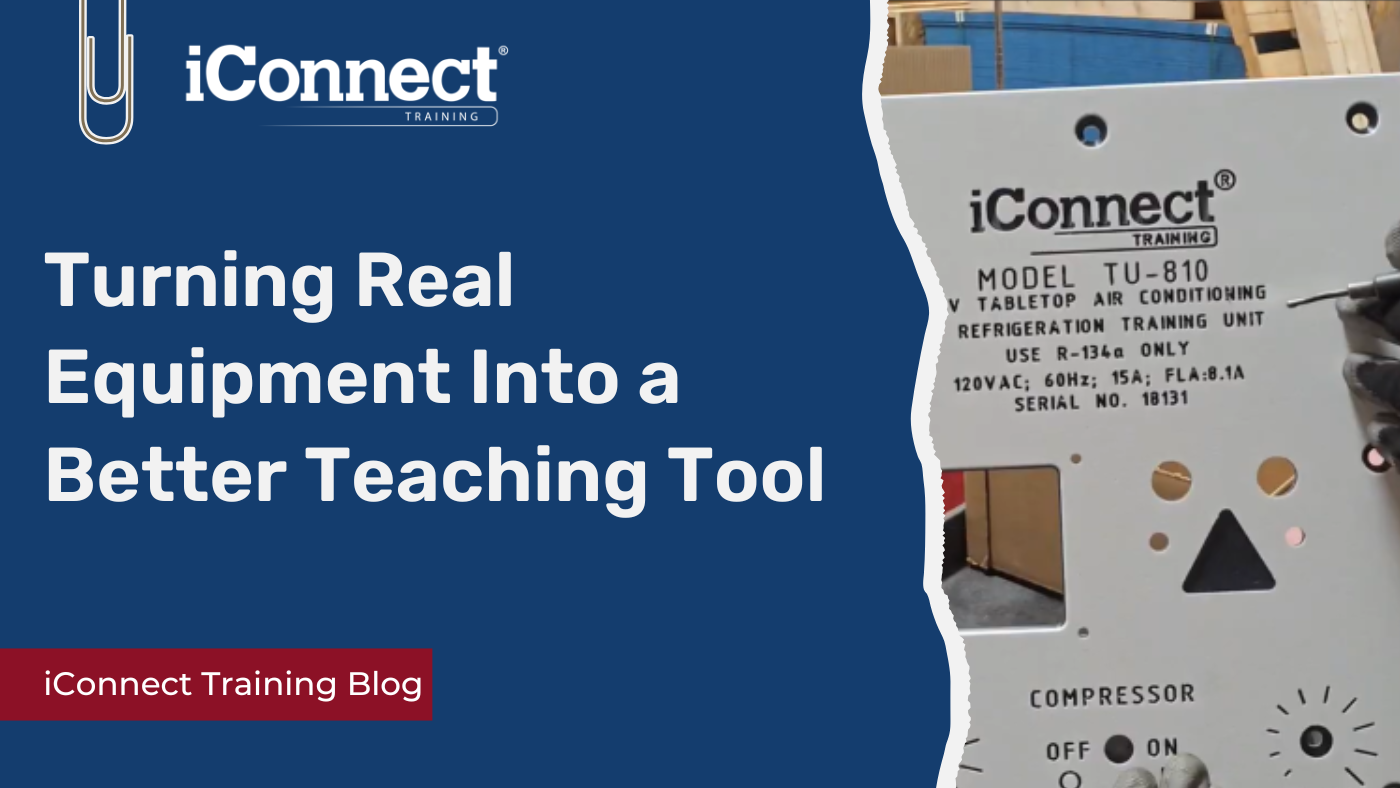
Real HVAC and electrical equipment is built to operate efficiently in homes, businesses, and industrial environments. It is not necessarily built to help a student understand what is happening inside the system.
Components may be enclosed, wiring can be difficult to follow, and critical parts are often positioned where an instructor cannot easily demonstrate them.
That is where the transformation begins.
During a recent ESCO Roadshow tour, Clifton Beck visited the iConnect Training manufacturing facility to see how real equipment becomes a hands-on technical training system.
Real Equipment Is Not Designed for Instruction
A factory-built system is typically compact by design. Manufacturers place components where they make the most sense for installation, performance, and space efficiency.
That works well in the field, but it can create challenges in a classroom.
Students need to be able to:
- See individual components clearly
- Follow wiring from one connection to the next
- Access mechanical and electrical systems
- Understand the sequence of operation
- Practice troubleshooting without unnecessary barriers
Instead of asking students to learn around the limitations of factory equipment, iConnect Training rebuilds the equipment around the learning experience.
Key Takeaway
A training unit should not simply operate like real equipment. It should make the operation easier to see, explain, test, and understand.
Opening the System for Better Access
The process often starts by disassembling a factory piece of equipment.
Components are repositioned and secured so students and instructors have better access to the mechanical, electrical, and control systems. Parts that would normally be hidden behind panels can be brought into view.
The goal is not to change how the equipment functions. The goal is to make that functionality easier to teach.
This gives instructors room to demonstrate what is happening while allowing students to trace the system for themselves.
Rewiring Without Losing the Real-World Connection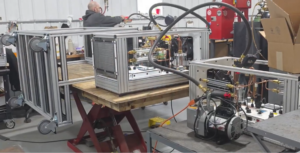
Repositioning components requires more than moving parts around a frame.
Wiring may need to be extended, color-coded, and routed to each relocated component. That work must remain consistent with the original manufacturer specifications and wiring diagrams.
Maintaining that consistency is important.
Students are still learning from the same wiring patterns, components, and system relationships they may encounter in the field. The difference is that those connections are now easier to locate and follow.
That makes it possible to teach diagnostics without removing the real-world context.
Hand-Built Around Student Understanding
The ESCO Roadshow tour follows the manufacturing process from the initial order through drafting, fabrication, assembly, and testing.
When customization is needed, the design team can adjust the system using CAD drawings before fabrication begins. Frames are measured, cut, drilled, and assembled according to those specifications.
Graphics and panels are also created through a multi-step CNC process. Vacuum controls hold the material in place while precise cuts and access points are made.
Although tools and technology support the process, much of the final construction is completed by hand.
That matters because these systems are not designed for high-speed mass production. Each layout decision is made to support:
- Instructor visibility
- Student access
- Clear component identification
- Logical wiring paths
- Easier troubleshooting
- Long-term serviceability
The result is equipment that is built to teach clearly, not simply built quickly.
More Than a Piece of Equipment
Once assembly is complete, each training system is thoroughly tested.
The accompanying curriculum, manuals, and instructional materials are prepared for the specific trainer before everything is packaged and delivered.
This is an important distinction. A training unit on its own is only part of the classroom experience.
The equipment, curriculum, activities, and instructor resources must work together. Students need opportunities to observe the system, understand the theory, perform measurements, diagnose problems, and connect their findings to real service scenarios.
Building a Better Bridge to the Field
Students eventually need to work on equipment that was not designed with teaching in mind.
Before they reach that point, they need an environment where they can slow the system down, see how each part connects, and build confidence through repetition.
A well-designed trainer provides that bridge.
It uses real components and familiar system configurations while giving instructors the visibility and access needed to explain them clearly.
That is how real equipment becomes more than a working system. It becomes a better teaching tool.
Watch the ESCO Roadshow facility tour to see how iConnect Training systems move from design and fabrication to wiring, testing, curriculum development, and delivery.